

The Sony 4/12-24mm G is a lens I had the opportunity to utilize before it was made available to the public in mid-2017. At the time of its release I was a newly added member of Sony's Alpha Imaging Collective and was attending their first Kando retreat in California.
Initially I had utilized this lens with the then new Sony Alpha 9. The latest camera being utilized with this camera is the Sony Alpha 1 and it's been quite a phenomenal lens with this camera! I always favored wide angle lenses for much of my early years. One of the lenses missing from the lineup for the entire existence of the Sony A-mount was an ultra wide angle lens. The widest we ever had there was the Vario-Sonnar 2.8/16-35mm ZA lens. Upon the creation of the E-Mount the widest full frame lens option was once again a 16-35mm in the form of the Vario-Tessar 4/16-35mm ZA. I had hoped Sony would finally give us something wider than that and they delivered!
My experience with this lens was leaving quite impressed! It’s the wide angle lens that many landscape, interior and architectural Sony photographers have been wanting since 2006 and finally were given a native option. It may not have been a ZEISS (which I was hoping for), but in all honesty this is a VERY solid and great quality lens!

Sony FE 12-24mm G Specs & Images
- Sony E-Mount
- Nano AR Coating
- Aperture Range: f/4-f/22
- 122 - 84 degrees - Angle of View
- 11.02″ inches (28cm) Minimum Focus Distance
- 0.14x Magnification
- 1:7.14 - Max Reproduction Ratio
- 17/13 Elements/Groups
- 7 Diaphragm Blades, Rounded
- 565 grams
This is a wide angle FE lens for Sony E-Mount, suited for the Sony Full Frame Mirrorless line of Alpha cameras. This lens can be used on the APS-C (crop body cameras), to give you an effective viewing angle of 18-36mm.
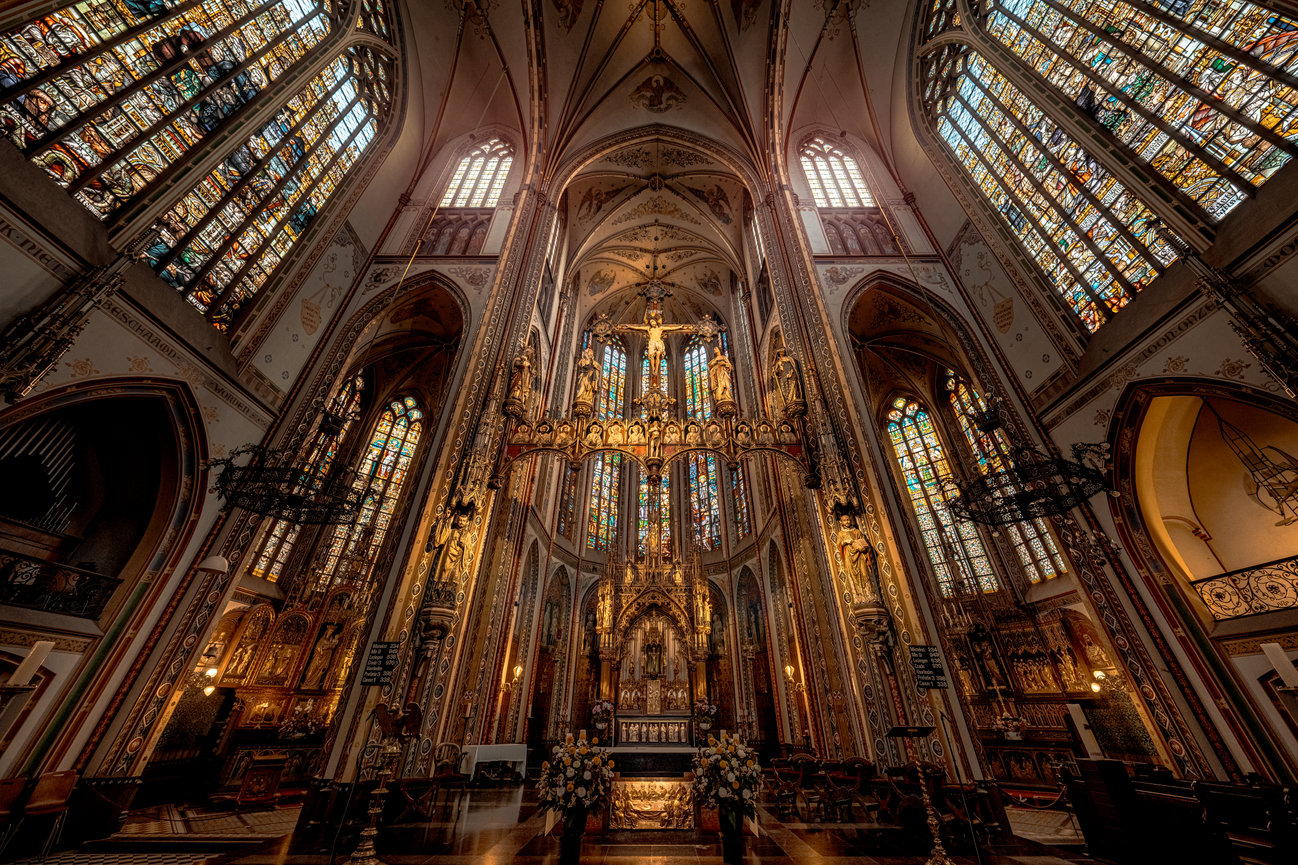
My usage of the lens is primarily for compositions that I specifically need the 12mm focal length for. I've captured a few landscape images with this lens early on in my initial use, but as of late it's been more for architectural images, which you'll see throughout this review.

What I think about the 12-24mm
An ultra wide lens has been one I’ve long awaited for from Sony and this is a well welcomed addition!
The lens has a very nice build quality. It has a petal lens hood that's built onto the lens, which means you can’t attach a traditional screw-on lens filter to this lens. You have the G series and Sony logos on the sides of the lens, a focus hold button and an AF/MF toggle switch.
What I love is that it’s not a very huge lens for a lens of this range, but grant it it is a slower f/4 aperture lens as well. Its newer and larger sibling, the Sony 2.8/12-24mm G Master is quite a bit larger and heavier than this lens.
Quality wise is what you’d expect from a lens of this caliber, it’s sharp, fast at focusing (and silent) and offers some very great color reproduction. My love for ZEISS is one that can’t be denied, but I was quite impressed with this lenses reproduction and it shows how far Sony has come in their lens development. This lens is really sweet! Sweet enough to replace my ZEISS 4/16-35mm perhaps? I think theirs room for both of these actually, vs one over the other. I love them both for different reasons, such as the range advantages both offer.

What makes the 12-24mm great?
- Image Quality/Distortion - For a lens with the G series badge you’re expecting top quality and this lens does just that. It's a very sharp lens and offers nice colors. throughout the focal range. Wide open at f/4 the edges can be a bit on the soft side, but for most utilizing this lens you may be stopped down and not have any issues with this. This lens handles distortion relatively well also. For a lens offering 12mm you may be surprised at how well it does at that focal length.
- Focal Range - Long time Sony photographers have really wanted a lens capable of wider than the 16mm native we had for the past 11 years prior to this lenses release. Finally it’s here for the E-Mount (can't believe we never got one on the A-mount before the line was phased out) and it’s a winning lens. Going from my 16-35mm ZEISS to this may not have seemed like much on paper but visually this is a massive difference from 16mm to 12mm. It’s ultra wide and still gives you a nice range up to 24mm. Pair this with the Vario-Tessar 4/24-70mm, Sony 2.8/24-70mm G Master or the Sony 4/24-105mm lenses and you’re capable of keeping to just two lenses for most things you may be photographing.
- Dust & Moisture Resistant/Build - Having a lens that can withstand heavy usage is important and that’s obvious for landscape photographers who are among the elements and those unseen moments of sudden wind can knock over your tripod. This lens is dust and moisture resistant and has a build that should hold up well with that unexpected fall, should it happen! With the built on lens hood you obtain a little extra protection for the glass element at the front. Being that you can’t place a UV filter on this lens your lens is quite vulnerable, but the lens hood gives a bit of a buffer from the lens element to the end of the lens hood.
- Vignetting - This lens has quite a bit of light fall off in the corners (apparent once importing to Lightroom and applying lens correction), but considering I add vignettes to just about all of my images I appreciate the natural vignette.

What makes the 12-24mm not so great?
- Flaring - When you have the lens pointed in direct sunlight you will obtain quite a lot of flaring from this lens. As someone who's utilized mostly ZEISS lenses I'm not used to having a significant amount of this (their T* coating does very well in suppressing flaring) and for a premium lens it's a bit more than what I'd expect, but it actually can be aesthetically pleasing for certain images where I may want that in images and have to add it in Photoshop, just because of how well ZEISS minimizes this. Pros and cons to everything, eh?
- Filter Usage - As expected with this kind of lens you're unable to use the convention screw on type filters and must utilize a bracket system with this lens. If you prefer this setup then it's not really a negative for you, but it's something to point out for those who may not prefer using such a system and to keep this in mind. There are rear filter options available, but if you do not want to take your lens off while in the field then this may not be the route for you either.
Sony 4/12-24mm G vs Sony 2.8/12-24mm G Master?
In the later years Sony produced a faster 2.8/12-24mm G Master option of this lens. The G Master not only gives you the faster and wider aperture but also is a higher quality lens optically.
If you're wanting a compact or lighter lens option in this range then the f/4 G version is the lens choice for you. If you value speed and best overall optical quality then the f/2.8 G Master version is the choice for you, especially if astro-photography is at the top of the images you're going to be capturing.
I opted for the f/4 G lens version because weight was my biggest concern. All of my ZEISS lenses are very small lightweight lenses and I didn't want a lens that wasn't going to be used that often for images to be something heavy and especially not extremely expensive. I feel the G lens does its job very well and I think many may not miss not having the G Master version.

Conclusion: Who is/isn’t this for?
Landscape and architecture photographers will appreciate this lens being in the Alpha lineup. It’s a first for us having a zoom lens of this range and one many would get a lot of use from.
At around $1,700 USD it’s certainly not the cheapest wide angle lens on the block. That may set many people back or eliminate this lens as a choice for them.
If you’re wanting a solid alternative then look into the ZEISS FE 4/16-35mm Vario-TESSAR. The drawback is that you do lose that wide angle viewpoint of the 12-24, but you’re spending $500 less on a lens. Which will be most important to you, $500 or 12-16mm? Both are f/4 lenses, metal builds with great image quality and color so roughly those two things will be the deciding factor for most.
More Photos
All images have also been post processed from their RAW files, using Adobe Lightroom.




Leave a comment
0 Comments