

- Check the price of the ZEISS Distagon T* 1.4/35mm ZM on ZEISS Store (25% off with ProfHinesZEISS) | B&H Photo | Gallery of Images
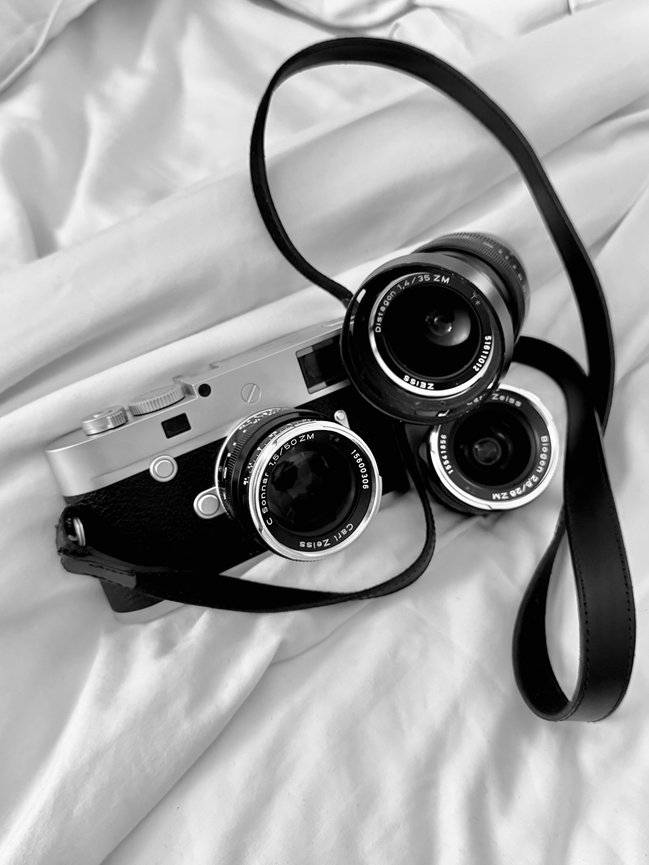
The ZEISS Distagon T* 1.4/35mm ZM remains the latest addition to the ZM lens lineup at the time of this review, having been introduced in 2014 for the Leica M-mount system. The ZM lens family originally debuted alongside the ZEISS Ikon ZM camera, announced in 2004 and released in 2005, utilizing the Leica M bayonet mount. Unlike many of its predecessors, the Distagon 1.4/35mm ZM was engineered with both traditional film photography and modern digital sensors in mind. This versatility extends beyond Leica M cameras, allowing the lens to be adapted to other systems, such as the Leica SL series, Sony Alpha and Fujifilm X cameras. Its advanced optical design also makes it particularly well-suited for today's high-resolution digital sensors, including the 60-megapixel sensors found in cameras such as the Leica M11 and M EV1.
I've owned the Distagon 1.4/35mm ZM since January 2025, initially putting it to work on my Sony Alpha 7C II through an adapter. I would eventually transition to using the lens natively on Leica M bodies, specifically the M10-P and M10, which have become part of my photographic workflow over the past year. Having experienced this lens across two distinctly different camera systems, I've gained a greater appreciation for its optical performance, handling, and overall versatility. Throughout this review, I'll be sharing images captured with both Sony and Leica cameras, offering a broader perspective on what photographers can expect when using this lens in its native environment versus adapting it to a modern mirrorless system.

- Leica M10: Tokyo, Japan | See full image and EXIF data here
ZEISS ZM 1.4/35mm Specs
- Leica M-Mount (Full Frame lens)
- DISTAGON Optical Lens Design
- Aperture Range: f/1.4-f/16
- ZEISS T* Anti-Reflective Coating
- 49mm Diameter Filter Thread
- Metal Construction
- 0.7m Minimum Focus Distance
- 62.15 degrees Angle of View
- Manual Focus
- 381g - Weight
Something to note is that this lens is a Full Frame lens, but it can be utilized on cropped APS-C cameras, which will give you a 35mm equivalent focal range of 52.5mm.

- Leica M10-P: Havana, Cuba | See full image and EXIF data here
What I think about the ZM 1.4/35mm
The images here I think speak for themselves. This is an extremely beautiful lens, from build to optical quality. Whether it's mounted on my Sony or Leica bodies the results have been quite exceptional!
Throughout my career, I've had the opportunity to work with an extensive range of lenses, each offering its own unique characteristics and creative possibilities. The ZM 1.4/35mm is one of those lenses that reminds me why I fell in love with photography in the first place. There's something incredibly rewarding about slowing down, working with a manual-focus lens, and becoming more intentional with every frame. The 35mm focal length has always been one of my favorites for street photography (from the ZEISS Loxia 2/35 to the Sonnar 2.8/35 ZA lenses), offering a beautiful balance between capturing the environment and bringing attention to the subjects within it. What impresses me most about this lens is its remarkable sharpness, beautiful color rendition, and ability to preserve the subtle details that give an image its character.
For me, great photography has never been solely about the equipment, but rather how that equipment allows us to interpret and document the world around us. The ZM 1.4/35mm embodies that philosophy beautifully. Its wide f/1.4 aperture provides tremendous creative flexibility, particularly when working in challenging lighting conditions, while its optical performance delivers the clarity and dimensionality I've come to appreciate from ZEISS. Whether I'm photographing the energy of a bustling city or the quieter moments that often go unnoticed, this lens encourages me to remain observant, patient, and deliberate. It's more than just a beautifully engineered piece of glass; it's a reminder that some of the most compelling photographs come from taking the time to truly see what's in front of us.

- Sony Alpha 7C II: Brooklyn, New York | See full image and EXIF data here
What stands out about the ZM 1.4/35mm?
Manual Focus (Mirrorless & Rangefinder):
The focusing on this lens is unlike most mirrorless lenses, in that this is a fully mechanical focusing system. Why is this important? Mirrorless lenses with autofocusing when switched to manual are focus by wire (electronically controlled) focusing. They're not accurate in operation and can drastically change their distance based on the speed you adjust the focus ring. Mechanical ones have their distance markers on the lens and give 100% accurate focus operation. If you want certainty in focusing then this is how you want your focusing to be.
You'll find that this lens performs great with the Rangefinder system, if you're someone who's a purist and prefer to not use the LCD screen on the back of camera for photographing. With my Leica M10 and M10-P I didn't have a problem using either method for framing and focusing. If you're adapting to a different camera system just be warned that there are no electronics in this lens! EXIF data can't be recorded and you can't utilize automatic focus magnification. To punch in to check focus you will have to do so manually each time.
Build/Focus Ring:
The craftsmanship of this lens is something you can appreciate the moment you pick it up. Its all-metal construction gives it a reassuring sense of durability and precision, while the focus ring offers a smooth, controlled experience. The travel of the focus is short, which I prefer for street photography especially, compared to that of the longer focus throw on the Otus ML line of lenses.
The focus ring has a focus lip, which gives an improved focus operation. People either like it or don't, but I personally haven't had any issues with it being there. The operation of the ring is quite tight, so there won't be any play that you'll find once you've set the focus. One additional note about this lens and it's focusing is that it internally adjusts. The length of the lens doesn't change as you adjust the focusing ring.
Image Quality/Color:
If there's one area where I believe this lens truly distinguishes itself, it's in the quality of the images it produces. I've always placed tremendous importance on color accuracy, contrast, and the way a lens interprets natural light. The ZM 1.4/35mm delivers beautiful color rendition, impressive microcontrast, and excellent detail, even when photographing at wider apertures.
The ZEISS T* coating is particularly beneficial when working with challenging lighting conditions, helping preserve contrast and minimize unwanted reflections. For someone like myself, who enjoys photographing cities during the golden and blue hours, these characteristics are invaluable. The images have a wonderful sense of depth and dimensionality without sacrificing the natural atmosphere of the scene.
You'll notice that this lens has no chromatic aberration or distortion. Wide open performance is also fantastic from this lens.
Size/Weight (Adapted):
Looking at this lens for what it is, it's a compact 1.4/35mm lens that could be an amazing alternative for people who may want such a wide aperture lens, without the bulk and weight of a lens like the newer ZEISS Otus ML 1.4/35 for Sony E, Canon RF and Nikon Z mounts. If you don't need auto focus then this is a lens that's hard to beat for that.
For those adapting this lens it will be a well paired lens. With my Sony Alpha 7C II it's certainly a well balanced lens on that body. For those with larger body systems it could be a bit awkward with the size of the body to the size of this lens, but should get used to it after a while. While it's certainly not the smallest 35mm lens available for a rangefinder system, I appreciate that ZEISS has managed to incorporate such an impressive optical design into a relatively compact form. Its size makes it practical for extended photography outings, while its solid construction provides a reassuring feel in the hand. For me, it's a worthwhile compromise, especially considering the beautiful images this lens is capable of producing.

- Leica M10-P: Havana, Cuba | See full image and EXIF data here
What is there to dislike about the ZM 1.4/35mm?
Aperture Ring location:
You'll find that the aperture ring of this lens is positioned at the very edge of this lens. It can feel a bit unusual for some. This isn't really a major drawback and just something to note with this lens. Because this lens is longer the aperture ring as a whole is taller, compared to the other ZM lenses with far closer aperture to focus controls. Leica's aperture and focus rings are positioned closer, so if you're coming from a Leica lens to this it may seem a bit unusual at first and even more so if you switch between Leica and ZEISS often. Other ZM lenses however have a much closer distance between aperture and focus rings.
Size/Weight (Rangefinder):
While it's certainly not the smallest 35mm lens available for a rangefinder system, I appreciate that ZEISS has managed to incorporate such an impressive optical design into a relatively compact form.
This is a much taller lens than the Leica Summilux 1.4/35 versions that are out there as well. The Summilux is a lighter lens (338g vs 381 of the ZM) and smaller diameter at 46mm vs 49mm on the ZM.

- Sony Alpha 7C II: Brooklyn, New York | See full image and EXIF data here
What about using the ZM 1.4/35mm for video?
While the ZEISS ZM 1.4/35mm is primarily designed for still photography, I believe it has tremendous creative potential for cinematography as well. The wide f/1.4 aperture offers wonderful opportunities for working with available light, creating beautiful subject separation, and introducing a cinematic sense of depth to a scene. The two drawbacks in video usage I could see is the lack of electronics for EXIF data in this lens and the shorter focus distance compared to more hybrid and video specific lenses like the ZEISS Otus ML or Nano Prime lenses.

- Leica M10-P: Boston, Massachusetts | See full image and EXIF data here
ZEISS ZM vs Leica M lenses?
When comparing ZEISS ZM lenses to Leica M lenses, I believe both represent exceptional approaches to optical engineering, craftsmanship, and the art of photography. These are two German companies that stand for high-quality photographic equipment.
Leica has established a remarkable reputation for producing lenses with beautiful rendering, refined construction, and a distinctive visual character. However, what I particularly appreciate about ZEISS ZM lenses is their ability to deliver outstanding sharpness, microcontrast, color accuracy, and dimensionality, often at a more accessible price point.
While Leica lenses are celebrated for their unique rendering and compact designs, ZEISS offers an equally compelling photographic experience with an emphasis on optical precision and clarity. Having spent years exploring different lenses and understanding how they interpret light, I've come to appreciate that neither brand is inherently superior in every situation. Ultimately, the decision comes down to personal preference, creative vision, and the characteristics you value most in your images. For me, ZEISS ZM lenses offer a wonderful balance of performance, craftsmanship, and value without compromising the photographic experience.

- Sony Alpha 7C II: New York, New York | See full image and EXIF data here
Conclusion: Who is/isn’t this for?
If you're looking to acquire your first ZEISS ZM lens, this HAS to be your first choice! If you're a Leica M photographer, or simply an enthusiast of classic manual style lenses then the ZM line is one that should gain your interest. It's especially a great alternative to the Leica M photographer, who may be looking for more affordable M mount lenses that don't sacrifice quality.
The ZM 1.4/35 retails for $2,390 USD at the time of writing this review. It's Leica counterpart, Summilux 1.4/35mm is more than double, at $6,900 USD. If the ZM 1.4/35 is still out of range to some readers, ZEISS does offer a 2/35mm ZM ($1,240 USD) and 2.8/35mm ZM ($999 USD).
With my special promo code you can save 25% off a new ZM lens as well! Shop the ZEISS Store and use ProfHinesZEISS at checkout.

- Leica M10-P: Havana, Cuba | See full image and EXIF data here
I hope this article was informative and answered some of the questions you may have about the ZEISS Distagon T* 1.4/35mm ZM lens. I'd love to hear your thoughts about this, so share them with me below in the comments. If you have any questions leave a comment below as well.
NOTE: The links on this site are affiliate links, that help support this site.
CLICK HERE TO PURCHASE MY LIGHTROOM & PHOTOSHOP (CAMERA RAW) PRESETS

- Sony Alpha 7C II, Manhattan, New York | See full image and EXIF data here

- Leica M10-P: Havana, Cuba | See full image and EXIF data here

- Leica M10: Tokyo, Japan | See full image and EXIF data here

- Sony Alpha 7C II: Washington, D.C. | See full image and EXIF data here

- Leica M10-P: Boston, Massachusetts | See full image and EXIF data here

- Sony Alpha 7C II: Manhattan, New York | See full image and EXIF data here

- Leica M10-P: Havana, Cuba | See full image and EXIF data here

- Sony Alpha 7C II: Manhattan, New York | See full image and EXIF data here


Leave a comment
0 Comments