

The Sony 100mm STF lens was a new release for Sony in 2017, which I first had the opportunity to use during Sony Kando 1.0 in Santa Barbara, California. This is my first Sony G Master lens I’ve had the chance to review and it’s a great joy, as this is my favorite in the GM line of lenses for Sony!
This lens, unlike others is a very “unique” lens, in being that it’s a Smooth Trans Focus lens, or STF for short. What is that and what does it do exactly? That means it includes an apodization filter to create a buttery smooth bokeh. The filter darkens as it nears the edges and gives a smooth natural bokeh that your normal fast aperture primes don’t have and tend to show more disk like or cat eye-ish bokeh.
I’ve had several uses with this lens since it’s launch and I recently took this lens out in the streets of New York City, to capture some rather different images than what you’d typically find this lens being used for. With that experience it will offer a few things about this lens you may not read from other reviews and give you an outlook to other possible uses this lens may have outside of portraiture.

Sony 100mm Lens Specifications & Images
- Sony E-Mount (FE - Full Frame lens)
- Aperture Range: f/2.8 (T/5.6) - f/20 (T/22)
- Physical Aperture Ring & De-click Switch
- Nano AR Coating
- 52mm Diameter Filter Thread
- Metal Construction with Dust & Weather Seals
- 24 degrees - Angle of View
- 57cm Minimum Focus Distance
- Auto Focus
- 1.54lb (700g) - Weight
The Sony 100mm G Master offers a great De-Click feature, which you find on many other Sony and Sony/ZEISS lenses, which allows for those wanting to utilize this lens for video to have a fluid operation of the aperture ring.
It’s a well built lens, with dust and weather sealing, making it great for any inclement conditions. It also has a macro switching ring, OSS (Optical Steady-Shot) on off switch and AF-MF switch. Another feature that I love about many of the Sony and Sony/ZEISS lenses is the dedicated aperture ring. You can manually adjust from the ring or switch it to the “A” to have the controls via the camera as you normally would.
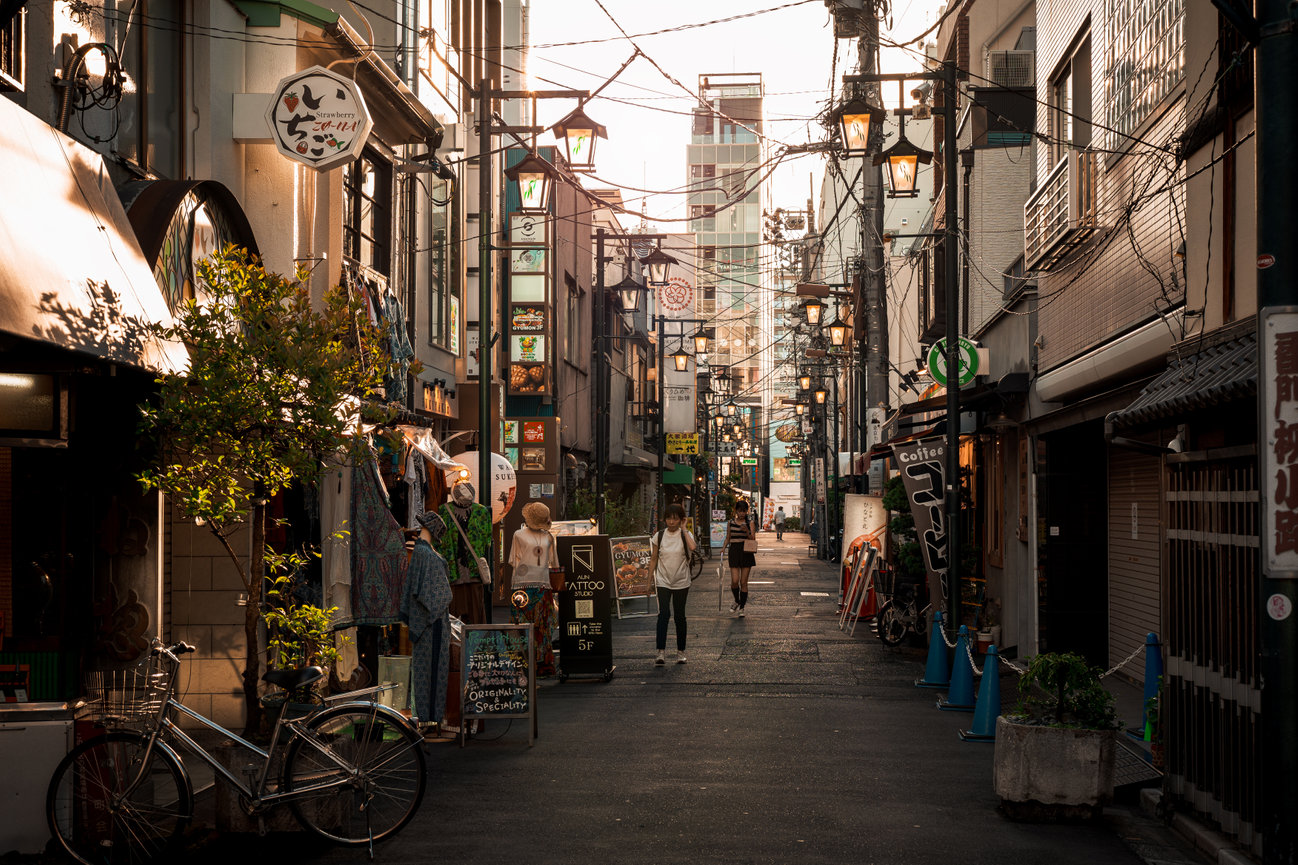
I’ve had the opportunity to use this lens for your typical portrait use, but also some street and architecture imagery, which is a bit unconventional of a lens like this. I do like to try many different variety of genre’s with any lens and I was eager to see how this lens would perform. It did quite well (Read my article “Street Photography with the Sony 100mm STF G Master” here).
Something to note is that this lens is a Full Frame (FE) lens for Sony’s Mirrorless E-Mount full frame cameras, but it can be used on the cropped APS-C cameras as well, which will give you a 35mm equivalent focal length of 150mm.

What I think about the 100mm
I’ve come oh so close to purchasing this lens! Does that tell you enough? If not, then it’s a flawless lens!
Optically this lens reminds me of the quality I love from a ZEISS lens. It has that very rich in color, sharp quality and contrast that’s so captivating. It certainly has some of the most beautiful bokeh you’d obtain from a lens, being an STF.
My use with this lens on all of the latest Sony’s, the Sony a9, a7R III and a7 III has been a great experience. Across the board the results were amazing! There’s really not much more to say on this lens, but that!

Light: The 100mm f/2.8 is actually an f(T)/5.6!
Yes, I know it says f/2.8 on the lens and yes I know it says T/5.6 on the lens as well, but I’m going to explain all of this, as one of the biggest confusions about this lens is just what do these different numbers mean.
A unique characteristic of an STF lens is that with that apodization filter I discussed earlier it cuts the amount of light that’s actually reaching the sensor. The light is being cut by 2 stops so that’s where the T value comes in to inform you of the actual light value. The “f” for this lens is strictly on the aperture and not aperture and light together, as any other lens you’d utilize.
For many looking for a lens in this range will not find this useful in low light situations because of this. Two stops of light is quite significant and would mean a higher ISO than normal to use this lens in various situations where lighting may not be it’s best.

What stands out about the 100mm?
- De-Click - This feature of the lens is great for cinematographers who wish to use this lens for filming. You’re able to De-Click the lens for constant fluid aperture movement from this lens.
- Bokeh - The highlight of this lens is certainly the bokeh. This lens produces the most stunning natural looking bokeh, which you can see from the portraits in this review. It’s a look you can’t obtain from any standard prime and makes it a very pleasing option for portraits and even commercial images. With the filter in this lens however, the bokeh seems more equivalent to a lens that’s stopped down a bit. The bokeh being so smooth and natural makes it not look as harsh as a standard f/2.8 lens and more of a 2/3rd or full 1 stop down from there, but still a beautiful bokeh none-the-less.
- Image Quality/Color - There’s such an amazing crispness in sharpness from this lens. The image above really shows how sharp and detailed it is. It’s hands-down the best G Master in my opinion and one I’ve found to use quite more frequently than many of the other Sony exclusive lenses. The colors are beautiful and vibrant, to where I’ve shared many untouched images with my community on Instagram to show just how good this lens is with the Sony cameras.
- Build - This lens has a very solid build as expected with being a Sony G Master lens. It’s good but not as great as the lenses I use more regularly from ZEISS, especially that of ZEISS Otus, Milvus and Loxia lenses with all metal construction. It is a lens you wouldn’t have to worry about among the elements however, but for the price it would have been a bit more robust like those lenses, but with it would incur added weight.

What don’t you like about the 100mm?
- Focusing - When it comes to focusing this lens is far from terrible, but it’s not the greatest either. It’s a bit slower than what I may like, but for the shooting conditions that most will presumably be using this lens I imagine won’t have an issue with it. I’m just the nut who takes this lens out to photograph street photography with it. =)

Conclusion: Who is/isn’t this for?
If you’re wanting an incredibly unique lens for portrait and commercial work then you’d really have a lot of use from this lens. It provides such a beautiful bokeh that for various images where you want that subject separation this lens will give you that, without the harsh bokeh of other prime lenses, especially when you’re focused on your subject quite closely.
If you photograph in more low light situations than anything then I would pass on this lens. It’s not a first choice option for that, BUT it can be used if you learn and know it’s limitations and have a camera like the a7S II or a7R III cameras that have impressive low light performance. It’s possible to use this lens, but it will be a lens not entirely ideal. Even in my usage of this lens that was decent I did struggle in obtaining a shutter speed adequate enough for many of images, at the expense of trying to keep my ISO as low as possible (even though I was at 5,000 - 8,000 more times than I may have liked on the a7R III). With decent to great light is where this lens really performs its best.
This is a very unique lens and one I would for sure recommend everyone to TRY before you BUY! Even for me, who’s photographed with well over 2 dozen Sony lenses I still tried this lens before buying, as I hadn’t considered it for several months, but the ultimate test was how would it perform as a lens I use for portraits on the NYC Subway, where I like to photograph and it did okay, but felt my other primes were still ideal (even though I really wanted a 100mm range lens).
For the price tag of $1,498.00 USD it’s a lot for a lens that wouldn’t have much use for me, compared to others at the same or lesser value.
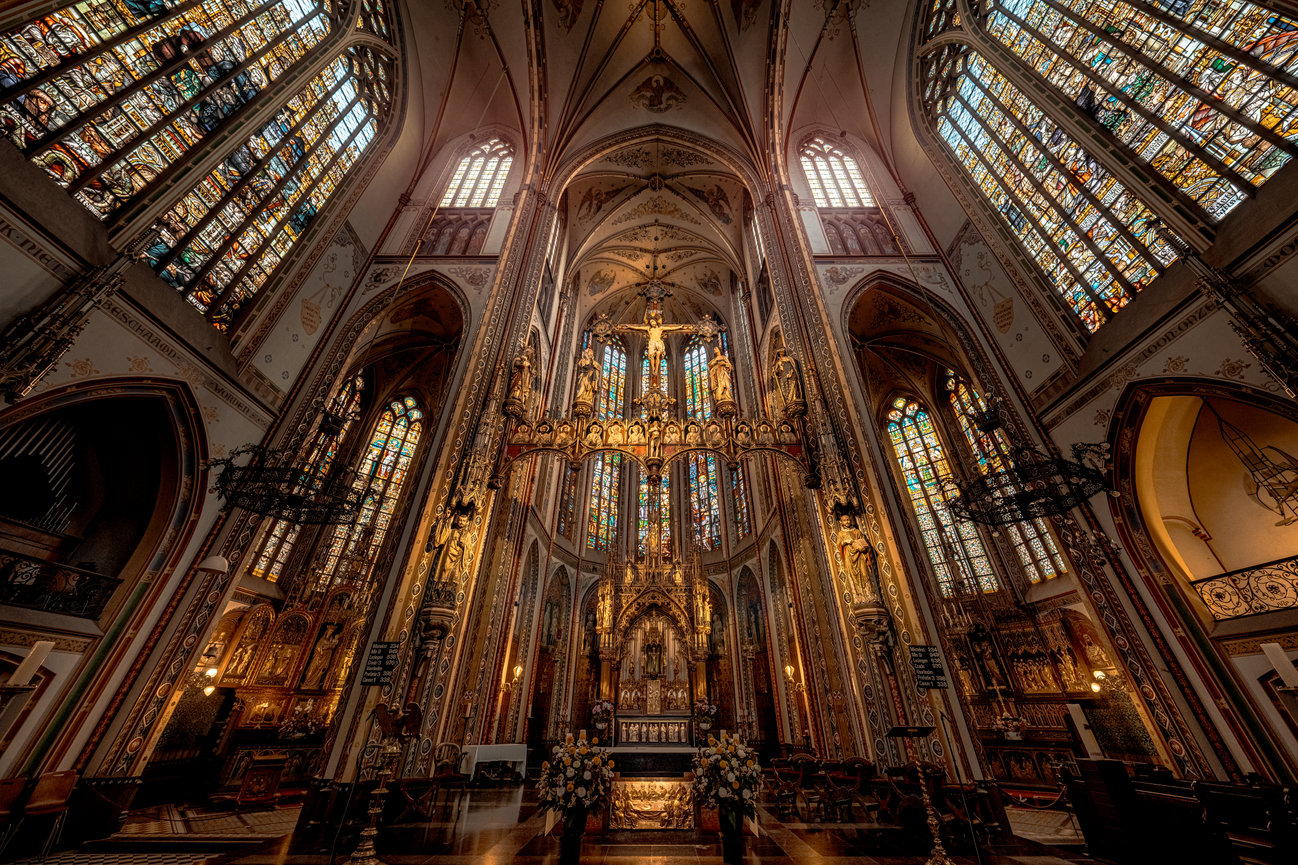
More Photos
All images featured in this review were photographed with the Sony a9, Sony a7 III and Sony a7R III. All images have also been post processed from their RAW files, using Adobe Lightroom.
CLICK HERE TO PURCHASE MY LIGHTROOM & PHOTOSHOP (CAMERA RAW) PRESETS




Leave a comment
5 Comments
Sep 10, 2026, 2:28:23 AM
Kenneth Hines Jr - It's certainly a great lens! I've seen many bad reviews on this, but I think people just don't know the right places to really take advantage of it or really know what an STF lens is and does.
It's one of my favorites in the GM lineup!
Sep 4, 2026, 6:33:41 AM
Dumitru Corban - Spot on! It's definitely not 'necessary' strictly for landscapes, but as a multi-tool for my workflow, it fits really well. I was actually torn between getting a backup body like an Olympus E-M10 Mark IV with a Sigma 60mm f/2.8—since I loved the Micro Four Thirds color rendering and framing from my old Mark II—or consolidating everything onto my A7R IV. I went with the lens idea because instead of carrying a bulky 70-200mm f/4, this GM gives me sharp daylight landscapes at f/8 (where the APD filter bypasses), great close-up abilities, and a specialized portrait look all in one compact prime. My only slight grievance is that the APD filter can sometimes over-smooth the background—wiping out those classic bokeh circles can look a bit forced depending on the scene. But as a space-saving 3-in-1 tool, it's a really compelling compromise
Sep 4, 2026, 12:00:57 AM
Kenneth Hines Jr - Thank you kindly.
For such usage of this lens I didn't find any difference in overall reproduction in details/textures. With landscapes the only thing you'll have with this lens is the loss in light throughput. If the primary usage is landscapes having such a lens isn't necessary, but in my experience with it that doesn't mean it would hurt by having it. It certainly isn't a great street lens, but for the right image it could be a great image nonetheless. For landscapes it would capture just as any other lens would and would just have that smooth focus rendering should you ever have a situation of shallow DoF.
Hope this response helps in some way for you!
Sep 3, 2026, 8:14:14 PM
Dumitru Corban - Great review Profesor !I'm absolutely fascinated by what this 100mm STF can do. I'd love to get your thoughts on using it strictly for daylight landscapes. How does that APD optics hold up for distant scenery, detail, and texture compared to traditional lenses? Thank you!
Jul 4, 2026, 6:06:03 AM
Irich photography - Good information